

Ladakh Trip from Philippines: A Complete Guide to Planning Your Himalayan Adventure
If you are planning a Ladakh trip from Philippines, you are in for a journey unlike a typical beach holiday. Ladakh, in the northern part of India, is a high-altitude Himalayan region known for dramatic mountains, Buddhist monasteries, turquoise lakes, winding mountain roads, remote villages, and cold-desert landscapes.
For Filipino travelers, the journey requires a little more planning because Ladakh does not have a direct international connection from the Philippines. You will generally need to enter India first and then travel onward to Leh, the main gateway to Ladakh.
This guide explains how to plan a Ladakh trip from Philippines, including flights, Indian visa requirements, the best time to visit, itinerary ideas, accommodation, transportation, packing, budgeting, altitude acclimatization, and practical travel tips.
Ladakh Trip from Philippines
Why Take a Ladakh Trip from Philippines?
Ladakh offers a completely different travel experience from the tropical landscapes of the Philippines.
Instead of beaches and island hopping, you will encounter:
Snow-covered Himalayan peaks
High mountain passes
Ancient Buddhist monasteries
Blue alpine lakes
High-altitude deserts
Traditional Himalayan villages
Dramatic valleys
Stargazing and clear night skies
Adventure activities such as trekking, motorcycling and rafting
The official Ladakh Tourism website highlights destinations such as Pangong Lake, Nubra Valley, Turtuk, Hemis Monastery, Thiksey Monastery and Umling La among the region’s attractions.
For someone traveling from the Philippines, Ladakh can therefore be more than just another vacation destination—it can be an opportunity to experience a very different landscape and culture.
Ladakh Trip from Philippines at a Glance
Travel Detail What to Know
Destination Ladakh, India
Main gateway Leh
International departure Manila or another Philippine airport

Typical routing Philippines → Indian gateway → Leh
Main airport in Ladakh Kushok Bakula Rimpochee Airport, Leh
Recommended trip length 7–10 days in Ladakh
Ideal first-time season May–September
Main attractions Leh, Nubra Valley, Pangong Lake, monasteries
Important consideration High altitude
Visa Indian visa/e-Visa requirements apply
Currency Indian Rupee (INR)
Language Ladakhi, Hindi, English and other local languages
Flight schedules and airline routes can change, so check your exact travel dates before booking.
Step 1: Decide When to Take Your Ladakh Trip from Philippines
Choosing the right season is one of the most important parts of planning.
Ladakh Tourism currently describes March–April as spring, May–September as summer, September–October as autumn, and November–February as winter, with different experiences in each period.
May to June
This is a popular period for travelers who want to see Ladakh’s famous mountain landscapes and lakes.
You can consider:
Leh sightseeing
Nubra Valley
Pangong Lake
Monastery visits
Scenic drives
Photography
Mountain biking or motorcycling where conditions permit
However, conditions at high passes can change rapidly.
July to September
This period can work well for travelers interested in a broader range of Ladakh experiences.
It is also a period when cultural events and festivals may take place. The official tourism calendar lists summer and September festivals and events in different parts of Ladakh.
September to October
Autumn can provide clear skies and changing mountain colors.
The official tourism site describes September–October as a period suited to photography and golden landscapes.
November to February
Winter Ladakh is dramatically different.
Expect very cold conditions, snow-covered landscapes and potentially difficult road conditions. The tourism authority notes that winter temperatures can fall to around -30°C in Ladakh.
Winter trips are better suited to travelers specifically looking for cold-weather and winter experiences rather than a conventional first Ladakh vacation.
Step 2: Check Indian Visa Requirements
For a Ladakh trip from Philippines, remember that Ladakh is part of India. You therefore need to meet India’s entry requirements before traveling.
The official Indian Visa Online portal states that foreign nationals entering India generally need a valid passport together with an appropriate Indian visa or eligible e-Visa.
India’s official e-Visa portal provides an online application process for eligible nationalities and includes e-Tourist Visa categories. The application requires items such as a passport bio page and photograph, and travelers should verify that their nationality and intended travel qualify before applying.
Before applying, check:
1. Passport validity
2. Passport condition
3. Current Indian e-Visa eligibility for Philippine passport holders
4. Permitted purpose of travel
5. Visa validity and permitted stay
6. Entry airport requirements
7. Current immigration instructions
Do not rely on an old blog for visa rules because Indian immigration requirements can change.
[Official India e-Visa Portal](https://indianvisaonline.gov.in/evisa/?utm_source=chatgpt.com)
The Indian government also currently advises foreign travelers to complete an e-Arrival Card within 72 hours before arrival where applicable. This is an arrival form, not a visa.
Step 3: Plan Your Flights from the Philippines to Ladakh
One of the biggest questions when planning a Ladakh trip from Philippines is:
How do I get from Manila to Leh?
Leh is the main air gateway to Ladakh, but there are generally no direct international flights from Manila to Leh.
A practical trip structure is:
Philippines → Indian international gateway → Delhi or another suitable Indian connection → Leh
Depending on your dates, you may travel through an Asian or Middle Eastern hub before reaching India.
Example structure

Day 1: Manila → international transit city
Day 2: Transit city → India
Day 3: India → Leh
Your exact routing will depend heavily on airline schedules, fares and your departure airport in the Philippines.
Manila or Cebu?
If you live outside Metro Manila, compare the total cost of:
Flying from your nearest Philippine airport
Taking a domestic flight to Manila
Overnight accommodation in Manila
Baggage charges
International flight prices
Sometimes a slightly more expensive international ticket from Manila can be cheaper overall once domestic transportation is included.
Step 4: Consider Spending a Night in Delhi
For many travelers from the Philippines, Delhi can be useful as an intermediate stop.
Rather than booking a very tight international-to-domestic connection, consider leaving some buffer time.
For example:
Philippines → Delhi → overnight in Delhi → Leh
This gives you additional protection against:
International flight delays
Immigration delays
Baggage delays
Terminal changes
Domestic flight disruptions
It also gives you the option of adding a short Delhi experience to your India vacation.
However, if you have a same-day connection with sufficient time and a convenient itinerary, you may choose to continue directly to Leh.
Step 5: Fly from Delhi to Leh
The final major flight is the journey from an Indian gateway—often Delhi—to Leh.
This is an important part of your Ladakh trip because Leh is already at very high altitude.
After arriving, don’t plan an exhausting sightseeing schedule immediately.
Instead:
Airport → hotel → rest → hydrate → acclimatize
This is especially important for travelers arriving from the Philippines, where most people are accustomed to low-altitude tropical environments.
Step 6: Take Altitude Acclimatization Seriously
This may be the most important part of planning a Ladakh trip from Philippines.
Ladakh is a high-altitude destination, and your body needs time to adjust.
The official Ladakh Tourism advisory currently states that tourists arriving in Leh should undergo at least 48 hours of complete rest for acclimatization before traveling to higher-altitude areas.
That means you should avoid making your itinerary:
Leh arrival → Pangong Lake immediately
Instead, use a slower schedule.
Better approach
Day 1: Arrive in Leh and rest
Day 2: Acclimatization and gentle Leh sightseeing
Day 3: Begin excursions
Day 4 onward: Nubra/Pangong depending on your itinerary
Symptoms to watch for
Altitude illness can involve symptoms such as:
Headache
Dizziness
Nausea
Unusual fatigue
Shortness of breath
Difficulty sleeping
If symptoms become serious or worsen, don’t continue ascending.
The Ladakh Tourism advisory specifically recommends stopping ascent and descending if symptoms worsen.
If you have medical conditions or concerns about high altitude, discuss the trip with a qualified medical professional before traveling.
Step 7: Build a 7-Day Ladakh Itinerary
For a first Ladakh trip from Philippines, 7 days in Ladakh can provide a reasonable introduction.
Here’s an example.
Day 1: Arrive in Leh
Keep your first day simple.
Suggested activities
Check into your hotel
Rest
Drink fluids
Eat light meals
Take a short walk only if you feel well
Sleep early
Don’t try to visit every attraction on your first afternoon.
Day 2: Leh Acclimatization and Local Sightseeing
Once you’ve had substantial rest, explore Leh at a relaxed pace.
Possible attractions include:
Leh Palace
A historic palace overlooking Leh.
A hilltop Buddhist monument with views over Leh.
Leh Market
A good place to walk around, shop for souvenirs and try local food.
Local monasteries
Depending on your schedule and physical condition, you can include nearby cultural sites.
The goal is still acclimatization rather than checking off as many attractions as possible.
Day 3: Thiksey Monastery and Local Attractions
Spend your third day exploring the Indus Valley.
One major attraction is Thiksey Monastery, which Ladakh Tourism describes as a 15th-century monastery located roughly 19 km east of Leh.
You can combine the visit with other nearby attractions depending on road conditions and your tour operator’s itinerary.
This is also a good day to experience Ladakhi architecture and Buddhist culture.
Day 4: Leh to Nubra Valley
Nubra Valley is one of the classic destinations to include in a Ladakh itinerary.
The journey takes you through high mountain terrain and spectacular landscapes.
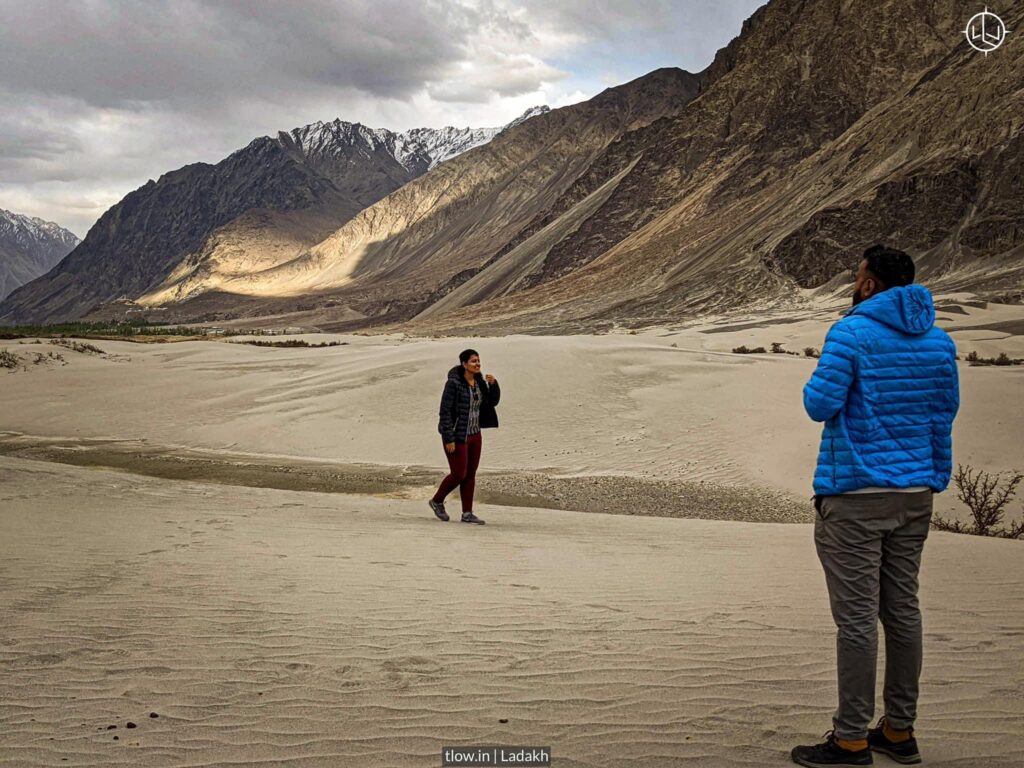
Things to experience in Nubra
Khardung La region
Hunder sand dunes
Nubra villages
Bactrian camel experiences
Mountain scenery
The official tourism website highlights Hunder’s cold-desert sand dunes and its double-humped Bactrian camels.
Spend the night in Nubra if your itinerary allows.
Day 5: Nubra Valley to Leh
Return to Leh or continue according to your tour plan.
Keep this day flexible because Himalayan road journeys can take longer than expected.
Use the evening to:
Rest
Eat
Prepare for Pangong
Check weather and road conditions
Charge cameras and phones
Day 6: Leh to Pangong Lake
Pangong Lake is probably one of the most recognizable landscapes associated with Ladakh.
Its high-altitude setting and changing blue tones make it a popular photography destination.
Spend time enjoying the landscape rather than rushing from viewpoint to viewpoint.
Depending on your itinerary and conditions, you may spend the night around Pangong or return toward Leh.
Day 7: Return to Leh and Depart
If your flight schedule permits, return to Leh and take your onward flight.
For international travelers, leave sufficient buffer between:
Leh → Indian gateway → international flight → Philippines
Avoid unnecessarily tight connections.
If your budget allows, adding one extra night before the international flight can make the trip less stressful.

A Better 10-Day Ladakh Trip from Philippines
If you have more time, a 10-day trip can be more comfortable.
Day 1
Philippines → India
Day 2
India → Leh
Day 3
Leh acclimatization
Day 4
Leh sightseeing and monasteries
Day 5
Leh → Nubra Valley
Day 6
Nubra → Leh
Day 7
Leh → Pangong Lake
Day 8
Pangong → Leh
Day 9
Leh buffer/free day
Day 10
Leh → India → Philippines
This schedule gives you some flexibility for weather, road conditions or simply resting.
Where to Stay in Ladakh
For your first trip, staying in Leh is convenient because it has the largest concentration of tourist accommodation and services in the region.
The Ladakh administration notes that Leh has hotels and guest houses of different categories.
You can choose among:
Budget guesthouses
Mid-range hotels
Boutique properties
Homestays
Luxury hotels
For Nubra and Pangong, accommodation is generally simpler than what you may find in major Indian cities.
When choosing accommodation, look for:
Heating
Hot water
Reliable electricity
Reviews mentioning cleanliness
Location
Restaurant availability
Oxygen/emergency arrangements where relevant
Cancellation policy

Transportation in Ladakh
There are several ways to explore Ladakh.
Private Car
This is a comfortable option for couples, families and small groups.
Advantages include:
Flexible stops
More privacy
Comfortable luggage storage
Ability to adjust the schedule
Shared Tours
Shared vehicles can reduce costs.
They’re particularly useful for solo travelers who don’t want to pay for an entire private vehicle.
Motorcycle
Motorcycle travel is popular in Ladakh, but it should not be treated as an ordinary road trip.
Mountain roads, altitude, weather and long riding days require experience and preparation.
If you’re traveling from the Philippines and haven’t ridden motorcycles extensively in mountain environments, consider your experience carefully before choosing a motorcycle itinerary.
Permits for Foreign Travelers
Permit rules can be particularly important for international visitors.
The Ladakh administration continues to review the framework for Protected Area Permits (PAP) and Restricted Area Permits (RAP) for foreign tourists, including areas in northern and eastern Ladakh.
Because regulations can change, don’t assume that a permit rule from an older travel blog still applies.
Before traveling to places such as:
Nubra
Pangong
Border-area destinations
High mountain passes
confirm the current requirements with your tour operator and the official Ladakh authorities.
What to Pack for a Ladakh Trip from Philippines
Coming from the Philippines means your normal tropical travel wardrobe won’t be enough.
Your packing list should account for strong sunlight, cold temperatures, dry air and large temperature changes.
Clothing
Pack:
Thermal base layers
Fleece or warm mid-layer
Insulated jacket
Windproof outer layer
Warm trousers
Comfortable hiking pants
Wool or thermal socks
Gloves
Warm hat
Sunglasses
Comfortable shoes
For winter travel, substantially heavier cold-weather equipment is required.
Sun Protection Is Essential
High-altitude sunlight can feel intense.
Bring:
Sunscreen
Sunglasses
Lip balm with SPF
Hat/cap
Moisturizer
Don’t assume that cold weather means you won’t get sun exposure.

Electronics to Pack
For photography and navigation, consider:
Smartphone
Camera
Extra batteries
Power bank
Charging cables
Universal adapter
Offline maps
Headlamp
Power availability can vary outside major towns, so charging everything whenever you have access to reliable electricity is sensible.
Food to Try in Ladakh
Your Ladakh trip from Philippines is also an opportunity to explore Himalayan cuisine.
Try dishes such as:
Momos
Steamed or fried dumplings popular throughout the Himalayan region.
Thukpa
A warming noodle soup that can be particularly enjoyable in the cold mountain climate.
Tingmo
A soft steamed bread often served with savory dishes.
Butter Tea
A traditional Himalayan drink with a distinctive taste.
Local Tibetan/Ladakhi dishes
Restaurants in Leh offer a mixture of Ladakhi, Tibetan, Indian and international food.

How Much Does a Ladakh Trip from Philippines Cost?
Your total budget depends heavily on:
International airfare
Indian domestic airfare
Travel season
Hotel category
Number of travelers
Private vs shared vehicle
Trip length
Activities
Shopping
Visa fees
Travel insurance
A useful way to create your budget is to divide it into seven categories.
Expense Budget Category
Philippines → India flights Major
India → Leh flights Major
Hotels Moderate–major
Transportation in Ladakh Moderate–major
Food Moderate
Visa/insurance Required
Activities/shopping Flexible
Instead of choosing a single fixed “Ladakh trip cost,” collect current quotations for your exact dates because airfare and hotel prices can vary considerably.
Money and Payments
India uses the Indian Rupee (INR).
Before leaving the Philippines, consider carrying:
International debit/credit cards
Some emergency cash
A way to access Indian currency
Backup payment options
Don’t depend entirely on cards or mobile payments in remote mountain areas.
Leh has more financial services than remote destinations, but once you leave the main town, payment options can become more limited.
Travel Insurance
Travel insurance is strongly worth considering for an international high-altitude trip.
Look for coverage that specifically addresses:
International medical treatment
Emergency evacuation
Trip interruption
Flight delays
Baggage loss
High-altitude activities if relevant
Read the policy wording carefully.
Some policies have exclusions for activities such as trekking, mountaineering or motorcycle riding.
Internet and Mobile Connectivity
Don’t expect the same connectivity you have in Manila or Cebu.
Remote parts of Ladakh can have limited connectivity.
Before leaving Leh:
Download offline maps
Save hotel information
Screenshot important reservations
Keep emergency numbers
Tell family members your itinerary
Carry power banks
For important travel documents, keep both digital and offline copies.
Photography Tips for Filipino Travelers
Ladakh is an excellent destination for landscape photography.
You can photograph:
Mountain passes
Monasteries
Prayer flags
Himalayan villages
Pangong Lake
Nubra sand dunes
Sunrise and sunset
Star-filled skies
The official Ladakh Tourism website also promotes the region as a destination for astro-tourism because of its dark skies.
Remember to be respectful when photographing people and religious ceremonies.
Respect Ladakh’s Culture
Ladakh isn’t simply a scenic backdrop.
It is home to longstanding Buddhist, Muslim and other cultural traditions.
When visiting monasteries:
Dress respectfully
Follow posted instructions
Don’t disturb prayers
Ask before photographing people
Don’t touch religious objects without permission
Keep noise low
Responsible tourism helps protect the cultural character that makes Ladakh special.
Common Mistakes to Avoid
1. Planning too many activities immediately after landing
Altitude needs to be your priority.
2. Underestimating the cold
Even summer nights can feel very cold at high altitude.
3. Booking extremely tight flights
A delay can affect your entire international itinerary.
4. Ignoring travel insurance
High-altitude travel involves risks that ordinary city vacations may not.
5. Assuming all roads are open
Mountain weather can affect road conditions.
6. Relying entirely on internet access
Download important information before leaving Leh.
7. Following outdated permit information
Check current requirements before traveling to restricted or border areas.
Ladakh Trip from Philippines: Sample Packing Checklist
Documents
Passport
Indian visa/e-Visa
Flight tickets
Hotel confirmations
Travel insurance
Ladakh Inner Line Permit


